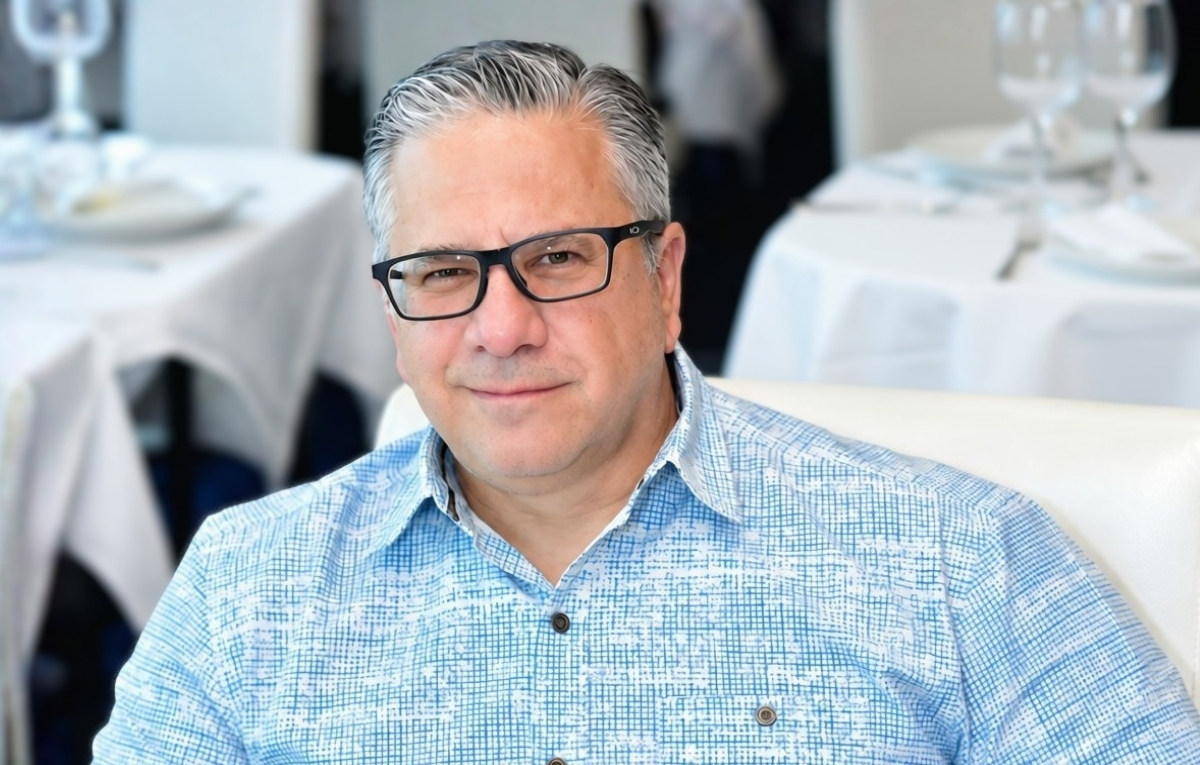
Retired NYPD Lieutenant Nick Bavaro ’91, ’99: Rescue, Hope & Loss on 9/11
NYPD Rank: Lieutenant (Retired), Emergency Service Unit
John Jay Degrees: A.S. in Police Science; B.S. in Police Science
Graduate Degree: J.D. from New York Law School
Hometown: Queens, NY
What was life like before John Jay?
I grew up in the Glen Oaks/Floral Park area of Queens, NY. There were kids my age everywhere, so I had a lot of friends. There were a lot of New York Mets players who lived in our building, including Buzz Capra, Dave Schneck, and Jerry Grote. They would play ball with us sometimes. They’d come home, tired after a game, but took time to throw the ball with us. There we were a bunch of eight, nine- and 10-year-olds, playing ball with the professional baseball players we watched on TV. It was just incredible and meant the world to us.
How did 9/11 impact you?
I was a lieutenant in the NYPD Emergency Service Unit—that’s the team in charge of emergencies, confined-space rescues, and searches. I wasn’t on duty on September 11th. I was driving to jury duty, listening to the radio, when they announced a plane had hit one of the towers at the World Trade Center.
When you work in law enforcement, you’re always waiting for the “big one,” especially in emergency services. When I heard that announcement, I knew I had to turn around and get to my team. I called my wife at work, then the Emergency Services Unit base for details. Officer Mark Chamberlain answered. He said, “Get in. Get in! It’s all hands! This is bad. It wasn’t a Cessna plane. It was an airliner.” I rushed home, got my uniform, got on the Belt Parkway, and headed to the station. The roads were empty except for firefighters and other first responders, and we acknowledged each other as we passed.
Once I got to the Emergency Services base and got a rundown of what happened, I said, “Alright, I’m going in,” and two of my guys said they were coming with me. We grabbed our gear—masks, filters, ropes, and three rifles, because by then the second tower had been hit and we thought we were at war—and loaded it onto the truck.
As we drove through the Brooklyn Battery Tunnel, a huge cloud of smoke, dust, and debris enveloped us. The second tower had just collapsed, and we had no clue. I stopped the car, and the guys yelled, “Forward, go forward!” I couldn’t see anything, and the windshield wipers weren’t helping. There was only darkness ahead, so I used the tunnel as my guide, bumping up against the curb while driving. Finally, we reached the tunnel’s exit and were in Manhattan, on Albany Street, just south of the World Trade Center.
The dust was like a dense fog. We saw some cops, but they walked past us because they couldn’t see us. First responders were covered in soot, having fled the collapsing towers. We made our way to Stuyvesant High School, where the command structure started coming together. It became our temporary headquarters, and we were given our rescue orders.
Our first mission was to go to Building 5, a nine-story building in the World Trade Center complex, and ensure everyone in the daycare center was safe. We walked to what used to be the plaza and saw blown-out windows, a mangled mess of metal, huge pieces of iron sticking out. It was completely catastrophic.
The site was also eerily quiet except for the hundreds of alarms going off. Those alarms were from the personal alert safety systems worn by firefighters. The building was hard to penetrate, but we made it through a narrow path that led directly to the daycare center. When we got there, we were so relieved to find the daycare center in the safe part of the building. No one was there.
Our next mission was to rescue a cop who was in the South Tower when it collapsed. We listened to the recording of his communication to see if he mentioned any clues about his location. We heard him say, “I’m hot. I can’t breathe. I’m hot. I can’t breathe.” He repeated it until his voice trailed off and the transmission ended. We knew we were listening to him dying.
Were there hopeful moments in the first 24 hours?
When two Port Authority police officers, Officer Will Jimeno and Sergeant John McLoughlin, were found alive, it was a moment of incredible hope. They were buried 30 feet deep in the rubble. There was a huge 40- to 50-foot-wide crater and rescuers had to slide down a beam, squeeze into a very small space that got narrower and hotter the deeper they went. We had a line going—we called it a bucket brigade—where we would pass along the buckets, tools, and equipment needed to help with the removal of debris and rescue.
The first Port Authority officer was pulled out of the rubble at one in the morning. It was probably one of the happiest moments in my life. I watched as the Stokes basket (stretcher) went up over the mound of rubble and people began handing it down the line. When he got to me, I touched his arm and said, “We got you, buddy, we got you. God bless you. You’re going home.” Seeing hundreds of people focused on this rescue and seeing that officer come out of the rubble alive was a moment I will never forget.
We worked at the pile (Ground Zero) for months, working our way through the rubble, mounds of debris and steel that were 50 feet high, on a mission to help. It felt insurmountable, but we knew we had to search for our friends, our co-workers, and all those people who were in those towers, helping with the recovery effort. At the end of one day, one of my colleagues said, “Goodnight, Lieu. This is it for me, I’m retiring today, have a nice life,” and shook my hand. He climbed up the ladder, made his way out of the pile, turned around, saluted, and walked away. I thought, What’s next for me? After this is done, what will I do? In the back of my mind, I always had this drive to go to law school.
There was something about New York Law School that called to me. I started in 2002, during my 18th year with the police department, attending at night, part-time. The school was located on Worth and Church Street, so not too far from the pile. It took me four years to complete, but I graduated with my J.D. Then, I practiced law for a few years and started a practice focused on elder care and guardianship in Queens before I fully immersed myself in the banking, focusing on compliance and conducting anti-money laundering investigations.
What do you want others to know about 9/11?
I spent the last year writing my 9/11 story with the help of Joe Badalamente, retired NYPD police officer. Our book, The Big One: Reflections of an NYPD Lieutenant, was released in time for the 25th anniversary. It took me years to open up and talk about that day. I don’t think I’m alone in that, but I realized that talking about that day, what I saw and experienced, was cathartic.
I hope people remember the incredible heroism and acts of service on that day and in the days that followed. May they hold the victims—whose lives were unfairly stolen away—in their hearts and honor the responders who showed up that day, and every day after, to help in the recovery.
One of the cruelest realities of 9/11 is that we are still losing people to the attack. I have friends and former colleagues, people I grew up with and people I worked alongside, people I knew and loved, who are living with 9/11-related illnesses. Some are fighting to survive. Others have died from their illness. Twenty-five years later, 9/11’s impact continues to unfold. I hope people remember the people we lost and the sacrifices made. I hope we never forget.