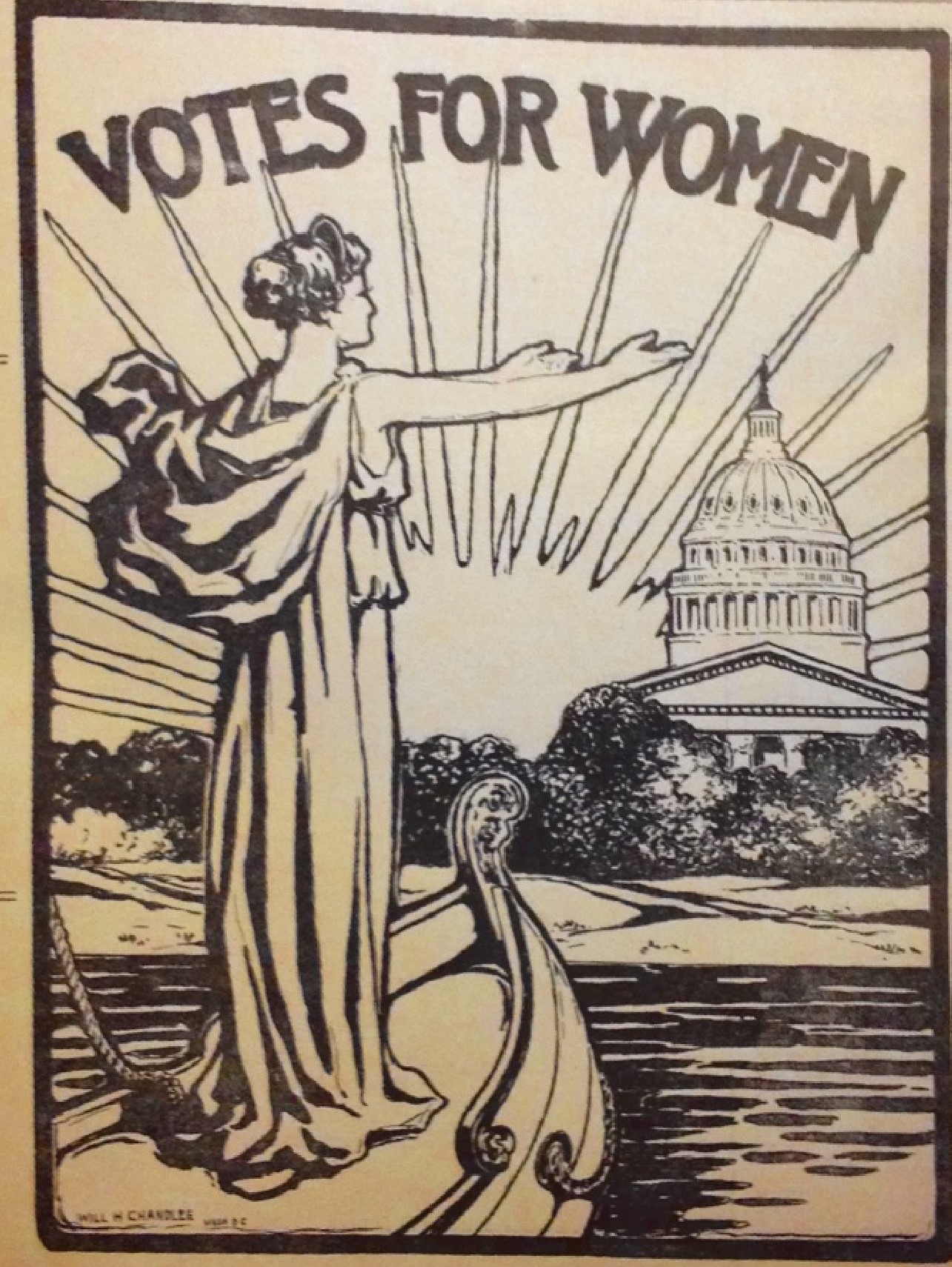
The Fifteenth Amendment to the constitution states that "the right of citizens of the United States to vote shall not be denied or abridged by the United States or by any State on account of race, color, or previous condition of servitude." Both Elizabeth Cady Stanton and Susan B. Anthony, the two foremost advocates of women's rights in the nineteenth century, believed, understandably, that the Fifteenth Amendment granted the right to vote to all women.
The three amendments ratified after the Civil War are now seen as immensely significant for the subsequent political history of the United States. The Thirteenth Amendment (1865) finally abolished slavery; the Fourteenth Amendment (1868) provides equal protection under the law, including the right of due process; and the Fifteenth Amendment (1870) extends the franchise to persons who had previously been excluded. Few people were as influential in campaigning for the amendments as Elizabeth Cady Stanton. She published her autobiography, Eighty Years and More, in 1898 and died four years later, in October 1902, eighteen years before the passage of the Nineteenth Amendment that finally allowed women to vote.
Ellen DuBois is Distinguished Professor of History and Gender Studies at the University of California, Los Angeles. She Ellen has written widely on the campaign for women's right to vote and is regarded as the foremost authority on the history of the suffrage movement in the United States. Her most recent book, Elizabeth Cady Stanton: A Revolutionary Life (Basic Books) has been widely reviewed, including in the Wall Street Journal, The New Yorker, and Smithsonian Magazine. She is the recipient of the Guggenheim Foundation Fellowship and the Joan Kelly Memorial Prize, an award of the American Historical Association.
Sponsored by the John Jay Department of Political Science & Center for International Human Rights
John Jay College educates fierce advocates for justice, a calling that demands robust debate, rigorous inquiry & respectful dissent. Consistent with this commitment, we support academic freedom & convene conversations reflecting multiple perspectives. The views expressed at events held at John Jay belong to the speaker(s) & do not represent the opinion of the college.