
Lydia de Castro ’91, ’10: Using Forensic Science to Identify 9/11 Victims
Current Role: Director, Division of Forensic Sciences, Westchester County Department of Laboratories & Research
Previous Role: Assistant Director, Forensic Biology Department, NYC Office of the Chief Medical Examiner
John Jay Degrees: B.S. in Forensic Science, M.S. in Forensic Science
Mentor: Peter De Forest, Ph.D., Professor Emeritus of Forensic Science
Hometown: Bronx, NY
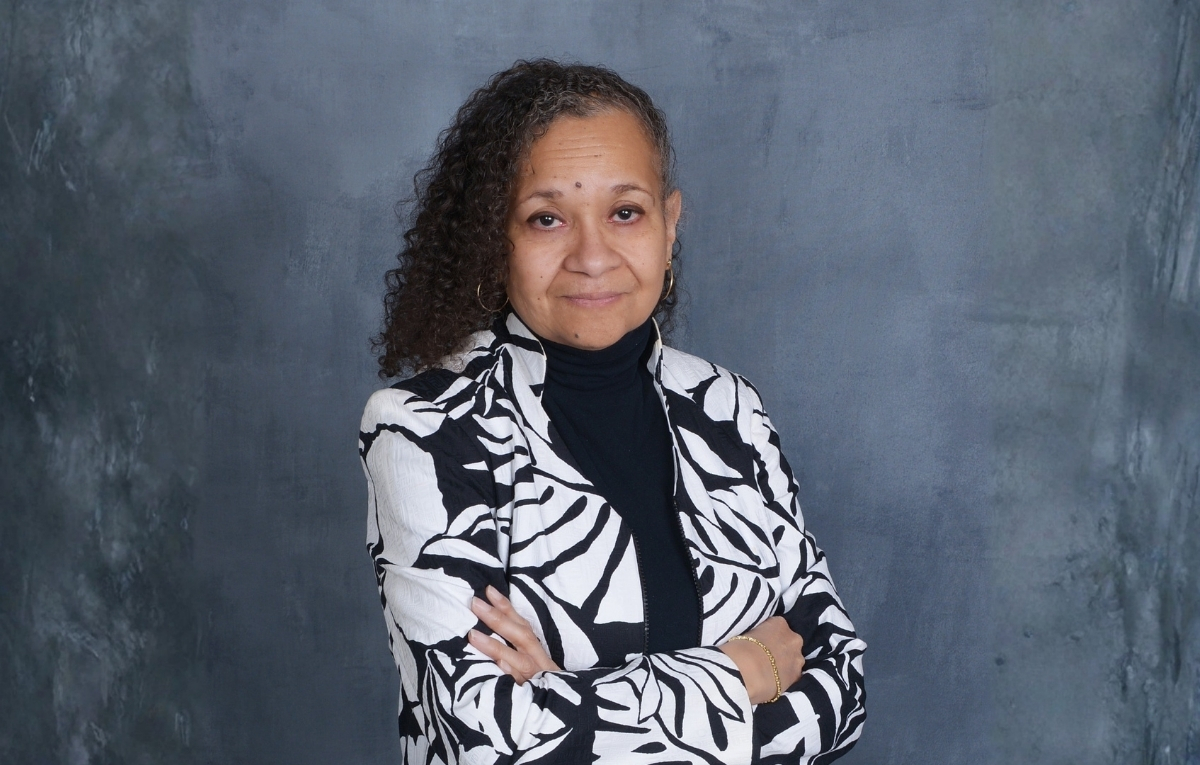
“Having worked at the New York City Office of Chief Medical Examiner (NYC OCME) during 9/11 and its aftermath, I lived that history. I witnessed the tragedy and its profound impact—the depth of loss, the uncertainty in the days that followed, and the many ways people showed up for one another,” says Lydia de Castro ’91, ’10, current Director, Division of Forensic Sciences, Westchester County Department of Laboratories & Research and former Assistant Director of NYC OCME’s Forensic Biology Department. “At OCME, we did what needed to be done, day after day, for years, quietly and without fanfare, but with an unwavering determination to help families find their loved ones and bring some measure of closure.”
What was life like before John Jay?
I grew up in the Bronx. My parents were very involved, serving on the school PTA, working with community leaders, participating in local government, and advocating for kids. My sisters and I were the first in our immediate family to go to college and earn a degree. I’m also the middle child. I have an older sister and younger sister. I think because of my status as a middle child, I was a natural-born mediator. I was often the peacemaker with my sisters and even in my friend group. I had a very happy, healthy, and blessed upbringing. My parents provided me with a strong foundation, so I always believed I could achieve big things.
What sparked your interest in forensics?
There was a show called Quincy, M.E. that aired on NBC when I was a kid. The main character, Quincy, had a co-worker named Sam Funiyama, a forensic lab technician. I was fascinated by Sam’s work. He did everything in the lab, from examining fibers to conducting chemical analysis. My favorite part of the show was watching Sam use the tools in the lab and his forensic knowledge to help solve cases. I think that’s where the spark for forensics was first lit.
Growing up, I was always a good student and interested in science, but it wasn’t until I visited John Jay and met with Dr. Peter De Forest that I knew it would become the path I would follow. At the time, Dr. De Forest was in charge of the Criminalistics program at the College. He sat with me and explained what was involved in the curriculum, what would be expected of me as a student, and some possible career tracks I could pursue. The enthusiasm he had for the field was palpable and infectious. He made me want to come to John Jay.
How did your John Jay education prepare you for your career?
There is no Lydia, the forensic scientist, without John Jay. At the College, I learned the importance of paying attention to detail and using tools in the lab. The training I got at John Jay allowed me to learn not just the science, but also how to apply it in a lab setting, because the science is key to helping an investigation.
One of the classes at John Jay that was fundamental to my career was Instrumental Analysis. It was a hard class taught by the late Professor Charles Kingston, Ph.D. He was the chair of the Forensic Science department at the time. Dr. Kingston was a tough instructor, but he made you better. When you presented your assignment, he would sit across from you, and if you were unclear or he didn’t like your response, he would say, “Go on.” Which, as a student, let you know you had to dig deeper and be thorough in your analysis. I credit his teaching style with my landing a job at OCME.
Before 9/11, what was a typical day at work?
Our days were pretty routine. We would accept samples, run batches for DNA extraction and amplification, analyze results and generate reports. At the time, I was a supervisor at the DNA lab at the OCME Department of Forensic Biology. One of my jobs was to review crime scene evidence submitted by the NYPD. At OCME, we worked in rotation schedules where each supervisor would take turns vetting the evidence. Often, the evidence was straightforward, and we could sign it into the lab and assign it a case number and an analyst. Other times we would have to call up the submitting officer to ask clarifying questions. Our criminalists performed both simple and complex evidence examinations. Complex cases were given to more senior analysts. Evidence types ranged from swabs to clothing and other items related to specific cases.
On September 10, 2001, the day before the attacks, we had a whole bunch of people start in the DNA lab due to a laboratory expansion.
Where were you during the 9/11 attacks?
I was on the Metro North on my way to work. The train was crossing the bridge from the Bronx into Manhattan and was approaching the Harlem 125th stop. I was listening to my Sony Walkman Radio on the ride when the program host announced that a plane crashed into one of the World Trade Center towers. I remember getting so nervous.
One of the things I used to do as a supervisor at OCME was watch the evening news, because I knew tonight’s news was tomorrow’s work. Doing that helped me feel better prepared for what was coming at work the next day. But with 9/11, no one saw it coming.
I remember sitting on the train, and my impulse was to say something out loud to other riders, but I didn’t want to panic or upset anyone unnecessarily, especially since we had no idea what had happened at the time. I got to OCME before the second plane hit. As I arrived, a group was already prepping to head down to the WTC with the Chief Medical Examiner. Meanwhile, the rest of us didn’t know exactly how the rest of the day would play out, so we continued with our normal routine. Some of the new people who started the day before were assigned to me. At that time, they were responsible for going downstairs to the morgue to collect a sample taken at autopsy and bring it back upstairs to our lab. But by evening on 9/11, that all changed. I was told all of my new staff would have to report to the morgue downstairs. The goal was to have them present at the morgue so they could help the Medical Examiner select the best tissue sample for DNA extraction.
How did your work change in the aftermath?
I was appointed supervisor of one of the newly formed disaster teams. Several members of the new staff were removed from the morgue to continue our regular course of work at OCME and intake samples.
For three years, the disaster team and I did nothing but 9/11-related work. It was total immersion. Each day we saw the way we worked change, our roles and tools evolve, and how the help of other agencies was essential to our mission of identifying victims.
Immediately after the attack, on the afternoon of 9/11, we realized we needed to put a system in place to keep track of what we were processing. At the time, all we had at OCME were paper files and bound logbooks, so my supervisor and I went up the block to Office Depot to buy bound books to hand-log these cases. The secretaries even created physical case files, but we had no idea of the magnitude of what we were dealing with. We were eventually loaned the New York State Police’s Laboratory Information Management System (a barcoding system where samples are scanned and logged) and taught how to use it. We also worked closely with the Disaster Mortuary Operational Response Team (DMORT) to support our tracking and processing of remains. Getting samples extracted was tough, especially in those early days. Initially, our extractions were done by hand, one test tube at a time. Eventually, senior scientists in the Forensic Biology laboratory validated a robotic instrument that would allow us to extract 48 samples at once.
We also had to make sure the samples we got were usable, and that was a major challenge for us. There were subterranean fires at the WTC site, and the tissues we were extracting did not yield DNA suitable for analysis. The tissue samples were buried and exposed to a lot of heat, which degrades DNA, so the only viable option we had was using the bones to extract a DNA profile. Unfortunately, we didn’t have the capability to do that at the time, so we worked with a private laboratory to extract DNA from those samples.
What were some of the main challenges your team faced?
The size and scope of the tragedy and the degradation of some of the remains were a big challenge. We had 2,753 victims and about 20,000 samples to manage. We also faced expectations that weren’t feasible. Around this time, forensic television shows were gaining popularity, bringing increased attention to the field and shaping expectations about what forensic science could accomplish. On these TV shows, viewers got answers from the forensic scientists in 48 minutes or less. That set up a false sense of reality for viewers. They believed the process worked fast, and we saw that multiple times following September 11. We had family members who would call the agency wanting to know why their family member hadn’t been identified yet.
Soon it was decided that the OCME would offer families tours of the laboratory and explain the process to them. Every Wednesday, I would give the tour to the victims’ families. At the beginning, we had the staff working at their stations, but after a while it became emotionally too much for some, so we had them vacate their stations before the family tour took place. What we hoped to accomplish through these tours was to show them our process and what was happening in the lab. We wanted them to know we were doing everything in our power to help identify their loved one.
How did you cope with the psychological toll of the job?
At OCME, they set up both individual and group therapy sessions. I also found ways to cope by talking with co-workers, but after a while they began to move on to other agencies and to leave the state. There was one co-worker I would get together with every 9/11 anniversary, but after a few years that kind of ended. There was a real void for me after that. I missed having someone to talk to who understood the situation and the gargantuan effort that took place in the weeks, months, and years following that fateful day.
As the rebuilding effort took place downtown, I began volunteering with the 9/11 Tribute Center to give tours and explain what happened. Only survivors, first responders, and people who worked at the site were allowed to give the tours. There was something cathartic about leading the tours and being part of that group of volunteers. Sharing the story of 9/11—what happened, the people, the heroes, and the efforts still taking place to identify victims and help families in their grieving process—was helpful to me.
What do you hope people remember about 9/11 and the work your team did?
The story of 9/11 is, undeniably, a tragedy. We experienced unimaginable loss and witnessed horrors that day that we will never forget. But it’s also a story of courage, compassion, resilience, and hope. Amid the devastation, we witnessed the very best of humanity: people running toward burning buildings to save lives; co-workers helping one another through clouds of dust and debris; strangers offering strangers bottles of water to wash the soot from their faces; and agencies, like OCME, working non-stop to bring victims home to their families.
OCME continues working to identify victims to this day. That, to me, is part of the legacy of 9/11: people refusing to give up on one another.