
Dr. Nydia Ayala
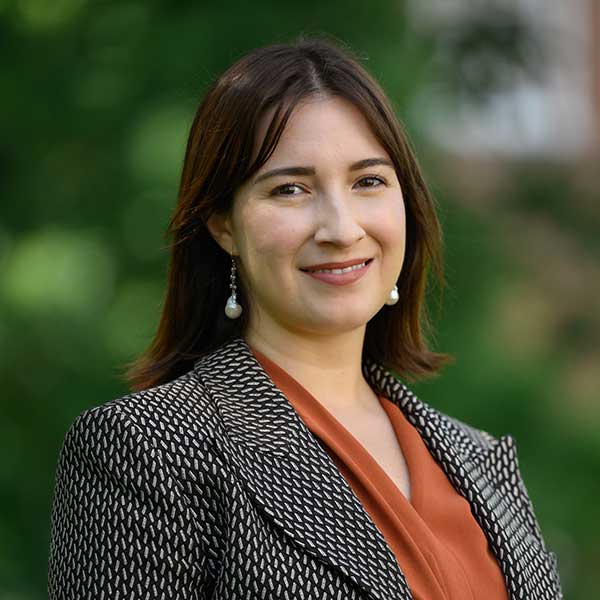
We are thrilled to announce that Dr. Nydia Ayala is joining the Department of Psychology at John Jay College of Criminal Justice as a tenure-track Assistant Professor this fall. Dr. Nydia Ayala is a Cognitive Psychologist who researches eyewitness identification procedures and the mechanisms through which police might distinguish an accurate from an inaccurate eyewitness.
Dr. Nydia Ayala earned her B.A. in Psychology from Toronto Metropolitan University and her Ph.D. in Cognitive Psychology from Iowa State University. There, she was a part of the Psychology and Law area and received training from Dr. Andrew Smith (Major Advisor) and Dr. Gary Wells (Co-Major Advisor). After graduating from Iowa State in 2024, Dr. Ayala served as a tenure-track Assistant Professor of Cognitive and Behavioral Science at Washington and Lee University, a selective liberal arts college in Virginia.
Nested in theories of recognition memory, Dr. Ayala’s research evaluates the applied implications of video recording police lineup procedures. In the first comprehensive evaluation of lineup video recordings, Dr. Ayala found that witnesses express numerous behaviors that can help distinguish accurate from inaccurate identification decisions (Ayala et al., 2026). Whereas accurate witnesses’ behaviors are reflective of a strong recognition experience and task ease (fluency), inaccurate witnesses experience a weak recognition experience and have trouble completing the lineup (disfluency). For the approximately 80% of police agencies in the United States that do not mandate lineup videorecording, this valuable information is lost (Police Executive Research Forum, 2013).
Dr. Ayala experienced her higher education as an immigrant from Mexico. She is highly attuned to the difficulties minority students face in the university setting and is looking forward to working with John Jay’s diverse student population.
Please join the Department of Psychology in welcoming Dr. Nydia Ayala to the Department and the John Jay community more broadly. We are looking forward to the ways her research and teaching will expand our curriculum and student research experiences.