
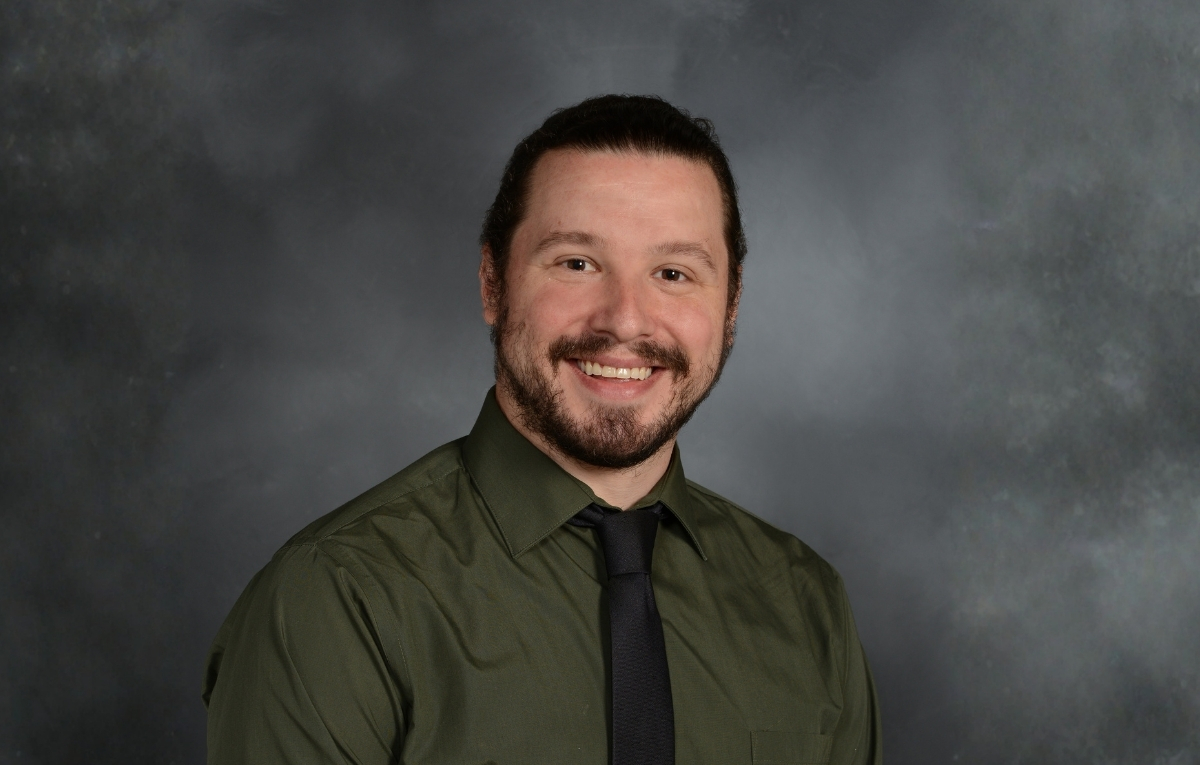
Richard Piszczatowski, MD, PhD ’11: From Forensic Science to Fighting Pediatric Cancer
Current Role: Fellow, Pediatric Hematology/Oncology, Memorial Sloan Kettering Cancer Center
Graduate degrees: Master’s Degree in Biomedical Science, Cell Biology from Albert Einstein College of Medicine; MD/Ph.D., Medicine/Cancer & Stem Cell Biology from Albert Einstein College of Medicine
John Jay Degree: B.S. in Forensic Science with a concentration in Molecular Biology
Minor: Anthropology
Programs: Program for Research Initiatives in Science & Math (PRISM); John Jay Premedical Society (co-founder)
Mentor: Nathan Lents, Ph.D., Professor of Biology
Hometown: Rutherford, NJ; New York City
What was life like before John Jay?
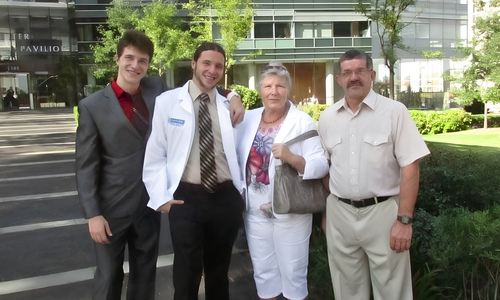
My parents, Wanda and Walter, are from a rural area of Poland. They were both born on farms, and neither of them finished school. Mom left school after the 8th grade, and my dad went to high school but never graduated. They worked on the farms and eventually got trade jobs in Poland. After a few years, they decided to come to the United States in the 1980s looking for a better life. They basically started from zero here and made a life for themselves and their kids. Knowing their story and the sacrifices they made has been one of my biggest motivations. Growing up, the most important lesson they taught my brother and me was that education is the most important tool you can have.
It’s why I’ve always worked hard and stayed academically driven, always striving to be the best student I could be and earn my degrees. I was the first in my family to attend college, the first to earn a master’s degree, and the first to become a doctor. My younger brother also followed that path. He graduated from Rutgers and is now working for a biotech company in California. Together, we’re fulfilling our parents’ dreams.
Why John Jay?
In high school, I became interested in forensic science and seriously considered a career as a forensic scientist or a medical examiner. Because of that, when it came time to apply to colleges, I applied only to those that offered forensic science as a major, and John Jay immediately stood out. It’s a hidden gem. The forensic science program was outstanding, the coursework met all pre-med requirements, and the College’s location and affordability made it an easy choice. I commuted instead of living in a dorm, which allowed me to save on room and board. By the time I graduated from John Jay, I was fully prepared for medical school and completely debt-free.
Looking back, coming to John Jay was the perfect choice because it made me stand out as a medical school applicant. While many students followed the traditional pre-med path, my experience was different. I was mentored, worked in a research lab, and even developed my own research project. That’s something that’s often difficult for undergraduates to do, since supporting a student’s independent research requires a significant investment of both time and resources. But at John Jay, I found nothing but encouragement and support. Those opportunities helped shape the path I’m on today.
What sparked your passion for science?
I think I’ve always been inclined toward science. During my senior year in high school, I had the opportunity to do a year-long internship at the crime lab in my county, and that was where I was introduced to forensic science. I remember being in awe of the work being done at the lab because it involved science in a unique and immersive way. It went beyond textbook definitions; it was about using science to solve crimes, and that, to me, was the coolest thing in the world. The seed for forensic science was planted then and there.
At John Jay College, my passion for science really solidified. Working with Dr. Nathan Lents in his lab as an undergraduate was a life-changing experience for me. Working in his lab, learning new techniques, and conducting research made me want to be a scientist.
How did research help shape your career aspirations?
Research played a vital role in preparing me for med school. It’s where all the lessons I learned in the classroom, in some way, shape, or form, began to be applied. When I joined Nathan’s lab in the middle of my first year, he was working on research that looked at this protein called connective tissue growth factor (CTGF), one of the main proteins involved in wound healing.
During this time, my mom was diagnosed with chronic myelogenous leukemia (CML), a cancer that causes the bone marrow to overproduce white blood cells. Her cancer diagnosis pivoted my interest and sparked my interest in cancer research. I told Nathan, “I have this experience under my belt. I want to use what I have learned to do cancer research.” We developed a project that looked at how CTGF is loaded into blood platelets. We knew that the cells responsible for producing platelets in the bone marrow, called megakaryocytes, don’t express CTGF themselves, which led us to ask: Where does the CTGF found in platelets come from? Through our research, we found that a transcription factor called Myeloid Zinc Finger 1 (MZF1) acts like a molecular switch, turning the CTGF gene on and off in the cells surrounding the megakaryocytes. In other words, we found the signaling process that prompts neighboring cells to produce CTGF, which can be incorporated into platelets.
That research experience was transformative. It solidified my passion for cancer research and confirmed that I wanted to pursue a career combining medicine and scientific discovery.
How is your mom doing today?
She’s great, completely in remission. CML is one of the more favorable leukemias to have, as it responds well to treatment. One of my big pinch-me moments in med school was attending a talk where I got to meet the person who developed the medication that saved my mom’s life. I was able to thank him and share mom’s story. It was one of the big highlights during my time in med school.
How did your mentor put you on the path to success?
Nathan constantly pushed me to do better. When I came to him with my research project idea, he had me explain the idea, and then asked to see preliminary data before he agreed to mentor me and back the project. Aside from the research work, he was also one of my fiercest advocates when it came time for me to apply to med school. He would read through my applications, provide edits and feedback, and he made sure to put me in contact with people working in the field.
The first time I applied to med school, I didn’t get in. I applied to 32 MD programs and got rejected by each one. It hurt, but I decided to keep going and worked with Nathan to find ways to strengthen my application. I took a gap year after graduating from John Jay, and during that time, I immersed myself fully in research with Nathan. We ended up going to two international conferences, one in Texas and the other in Malaysia. We wrote and submitted manuscripts for publication, and that was when things really started coming together for me. I realized I couldn’t give up the science research in medical school. I needed to combine the two. I then learned about medical scientist training programs (MSTPs) where you earn both your MD and Ph.D. at the same time. Doing so meant I could become a physician-scientist. I could care for patients but also conduct scientific research—it was perfect for me. When I applied to med schools the second time around, I applied to schools with MSTPs. I got into eight of them and chose Albert Einstein.
What drew you to the Albert Einstein College of Medicine?
The research being conducted at Albert Einstein really resonated with me. The labs, mentors, and projects in the field of biology were interesting. Albert Einstein’s location in the Bronx meant I was close to home and not far from my parents, which was important to me as they needed my help. Also, the demographic Albert Einstein served really called to me. It’s an underserved and underrepresented population in terms of medical access. During medical school, I got to see the whole spectrum of diseases—from manageable diabetes cases to complicated, end-stage conditions. Being at Albert Einstein gave me the opportunity to learn so much and gain a ton of experience. It was a great place to train.
What was your experience like as an adjunct instructor at John Jay?
After graduating from John Jay, I worked in Nathan’s lab. He felt I should be getting paid, so he suggested I teach and essentially created a role for me. I taught the lab section of Biology 103. I really enjoyed teaching. It was exciting to see the whole spectrum of learning. My goal was to meet each student where they were and help them get to where they needed to go. I loved helping them find the answers and learn new things. It felt great to have an impact on their education and career journey.
I find that the teaching experience also shaped how I work with patients and their families today. Managing a classroom of students taught me how to read a room, how to deal with different personalities, and to assess how best to communicate complicated things to someone. Pediatric oncology is a very special field because you have parents who are trying to navigate what is their worst nightmare, and you’re the person they’re turning to for help. I’ve had parents who come in knowing nothing and want me to steer the ship completely, and then I’ve had parents who want to know every single detail on the treatment plan and why I’m making the decisions I’m making. So, I’ll sit with them and answer all their questions. I try to explain things in a way they will understand, and I try to help them process it from an emotional standpoint as much as possible.
What does your work at Memorial Sloan Kettering Cancer Center entail?
The pediatric hematology/oncology fellowship is a three-year fellowship, following your three years as a pediatric resident. As a fellow, your first year is all clinical, meaning you’re working in a hospital or clinic setting, anywhere between 35–40 hours a week and 80–100 hours a week. You’re taking care of admitted patients, writing chemotherapy scripts for their treatment, working with the supervising attending to manage patient care, and teaching residents who are on the ground working with patients. In your second year, you shift over to predominantly research, where 90 percent of your time is research-focused, and 10 percent is spent in the clinic caring for your primary patients.
Is there a patient experience that has stayed with you?
When I was a resident at Memorial Sloan Kettering, I had a patient, a 16-year-old boy who had desmoplastic small round cell tumor (DSRCT), a rare and aggressive cancer that typically affects adolescent boys and develops in the abdomen or pelvic area. Unfortunately, DSRCT has a very high rate of recurrence. By the time I met him, he had already gone through several rounds of chemotherapy and multiple surgeries, but the tumors kept coming back. I remember seeing him when he arrived during one of my overnight shifts. He needed a significant amount of supplemental oxygen, couldn’t sit up, and was jaundiced because the tumors were blocking his gallbladder. As a physician, you recognize when a hospitalization may be an end-of-life admission, but that realization doesn’t mean you stop fighting for your patient.
For several days, he held on. During that time, my team and I worked tirelessly to get a medication called trastuzumab deruxtecan approved for him. It’s an antibody-drug conjugate, which essentially acts like a guided missile in the patient’s body. It carries a powerful chemotherapy payload directly to cancer cells in hopes of attacking the tumor without harming any healthy tissues. It’s currently being used to treat HER2-positive breast cancer and other types of cancer. We knew we had run out of standard treatment options, but we wanted to try one more thing. We wanted to give him every possible chance. On the sixth day, we finally received approval and were able to give him the medication.
After he was discharged from the hospital, he lived for another eight months. Those six days of work gave him and his family eight more months together. That time matters, and it’s always worth fighting for.
In ten years, where do you see yourself?
I see myself becoming an academic physician-scientist, bridging the gap between research and patient care. I hope to lead my own lab focused on pediatric cancers, discovering new ways to target these diseases and developing therapies that can ultimately make their way into the clinic/hospital.
Pediatric oncology is challenging because there’s limited funding and fewer opportunities for clinical trials. Since pediatric cancer affects a small number of patients compared to adult cancers, pharmaceutical and biotech companies are often less likely to invest in new treatments and clinical trials. I want to help change that by showing that the discoveries we make in the lab can translate into better therapies and better outcomes for children. That’s one of the reasons I love being at Memorial Sloan Kettering; we’re constantly working to move the needle and push cancer care forward.