
Sharon
Gandarilla-Javier
Assistant Professor
Education
Education
Ph.D., School of Social Welfare, University at Albany, SUNY (2020): Social Welfare, IPV, Policing, and Social Work Practice.
M.S.W., Graduate School of Social Service, Fordham University (2013)
M.A., Criminal Justice – Specialization in Criminology and Deviance, John Jay College of Criminal Justice (2009)
Graduate Certificate, Police Studies, John Jay College of Criminal Justice (2002)
B.A., Criminal Justice, John Jay College of Criminal Justice (1998)
Bio
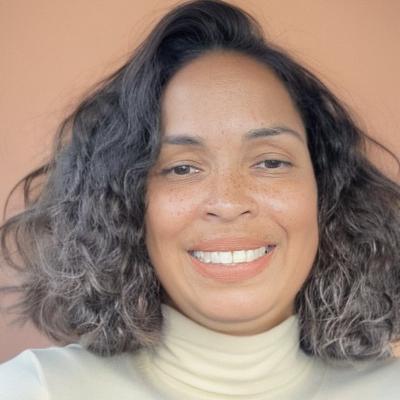
Dr. Sharon Gandarilla-Javier brings over two decades of combined experience in law enforcement and social work. A first-generation Latina, she graduated from John Jay College in 1998 and later completed the NYPD Graduate Certificate Program. She earned her M.A. in Criminal Justice, with a specialization in Criminology and Deviance, from John Jay College and her Ph.D. in Social Welfare from the University at Albany (SUNY). Dr. Gandarilla-Javier served as a New York City Police Officer for 10 years, including service in the Domestic Violence (DV) Unit, and has been a licensed social worker for 14 years, holding licenses in New York, Maryland, and New Jersey. She teaches PSC 101: Introduction to Policing; PSC 202: Police and Diversity; PSC 235: Women in Policing; and PSC 324: Police Use of Force. Her research concentrates on intimate partner violence (IPV) and violence against women, grounded in feminist theoretical perspectives. As a qualitative researcher, her work draws on phenomenology and participatory action research (PAR) to center survivor voices and critically examine law enforcement responses to gender-based violence. She is a certified TF-CBT practitioner and an NYPD-certified Methods of Instruction (MOI) trainer. She has also served in national leadership roles within NASW, advancing equity, ethics, and professional engagement.
JJC Affiliations
Courses Taught
- Sex Offenders in the Criminal Justice System (same as COR 230)
- Police and Diversity
- Future of Public Safety (Special Topics)
- Women in Policing
- Introduction to Police Science
- Police Use of Force
Professional Memberships
- International Federation of Social Workers (IFSW) – Member (2026)
- Academy of Criminal Justice Sciences (ACJS) – Member (December 2026)
- Vice Chair of ACJS Police Section (2026-2028)
- American Society of Criminology (ASC) – Member (October 2026)
- Latino Social Work Organization (LSWO) – Member (2026)
- National Association of Social Workers (NASW) – Member (June 2026)
- President, NASW Florida Chapter (2022–2024)
- Member, New York City Patrolmen’s Benevolent Association (PBA) – Ongoing
- John Jay College of Criminal Justice Alumni Association – Member
- Fordham University Alumni Association – Member
Languages
Scholarly Work
Rhodes, D.J., Gandarilla-Javier, S., Antwi, K., & Stewart, N. (Accepted April 9, 2026). Intersecting Harms: Structural and Social Determinants of Firearm Suicide in Black and Latino Youth. Cambridge Prisms: Global Mental Health.
Gandarilla-Javier, S., Rhodes, D.J. (Accepted January 19, 2026). Navigating IPV and social support services: Latina survivors of IPV testimonials. Journal of Health and Social Work.
Rhodes, D.J., Gandarilla-Javier, S., Smith, J.M., & Reichelderfer, T. (2026). Preparing Social Work Students for Law Enforcement Roles: Qualitative Insights from Practitioners. Journal of Teaching in Social Work, 1–20. https://doi.org/10.1080/08841233.2026.2620751
Gandarilla-Javier, S., Rhodes, D. & Greenfield, K. (2025). Latinas' perception of law enforcement who respond to intimate partner violence calls: a qualitative inquiry. Health Justice, 13, 61. https://doi.org/10.1186/s40352-025-00374-0
Rhodes, D.J., Smith, J.M., Geyton, T.A., Gandarilla-Javier, S., & Antwi, K.E. (2025). A Secondary Qualitative Analysis of U.S. Social Workers' Perspectives on a Post-2020 Policing Era. Families in Society. https://doi.org/10.1177/10443894251376395
Rhodes, D.J., Smith, J.M., Geyton, T.A., & Gandarilla-Javier, S. (2025). Considerations for Social Work Clinicians Interested in Policing: A Qualitative Report. Social Work. https://doi.org/10.1093/sw/swaf032
Rhodes, D.J., Ost, J.H., & Gandarilla-Javier, S. (2024). A qualitative exploration of social workers' job preparedness in law enforcement agencies. Social Work Research, 48(2), 103–115. https://doi.org/10.1093/swr/svae005
Research Summary
Dr. Sharon Gandarilla-Javier is a scholar of policing and social work whose research examines the intersection of law enforcement, equity, and community trust. Her work centers on intimate partner violence (IPV) and violence against women, with particular attention to Latina survivors’ interactions with police, structural barriers to reporting, and culturally responsive system engagement. She was recently awarded a PSC-CUNY grant to investigate IPV survivors’ perceptions of police responses, with the goal of informing trauma-informed and culturally grounded policing practices.
Her scholarship includes Latinas’ Perception of Law Enforcement Who Respond to Intimate Partner Violence Calls: A Qualitative Inquiry (Health & Justice, 2025) and Navigating IPV and Social Support Services: Latina Survivors of IPV Testimonials (Journal of Health and Social Work (2025), which deepen understanding of survivor engagement with formal systems and community-based supports. She has also contributed to a growing body of research examining the role of social workers within law enforcement, with publications in Social Work Research (2024), Families in Society (2025), Social Work (2025), and the Journal of Teaching Social Work (2025), addressing practitioner preparedness, policing in the post-2020 era, and training implications for social work students entering law enforcement settings.
Her current working on Feminist Participatory Action Research (FPAR) framework for IPV research, emphasizing survivor-centered knowledge production and intersectional analysis. Additionally, she maintains a scholarly interest in victimology and the characteristics that increase vulnerability to victimization, with a developing focus on the application of artificial intelligence (AI) to examine patterns of financial fraud and inform prevention and early-intervention strategies. Through her research, teaching, and mentorship, Dr. Gandarilla-Javier advances evidence-based practices that strengthen trust between law enforcement and marginalized communities.