Library Author Series
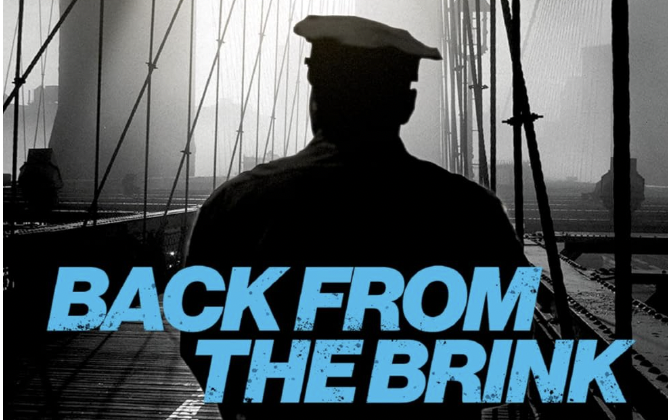
Back from the Brink: Inside the NYPD & New York City's Extraordinary 1990s Crime Drop
Dr. Peter Moskos, Professor, Department of Law, Police Science & Criminal Justice
Register
New York City’s 1990s crime drop was unexpected and counter to a long-established academic narrative that crime could only be addressed through greater changes in society. Using extensive interviews, this Peter Moskos explains the crime drop from the police officers’ perspectives.
Over the course of three decades—through riots, fiscal crises, urban decline and increasing gun violence—New York City’s seemingly inevitable fall transformed into rebirth. First, in the subway system in the late 1980s, the intractable problem of graffiti was solved through a five-year problem-solving approach that only tangentially relied on policing. In the early 1990s, public areas along 42nd Street—Bryant Park, Times Square and the Port Authority Bus Terminal—were improved through public-private partnership and effective management. This coincided with a new “broken-windows” strategy of policing in the subway that reduced crime by creating a safer environment for riders through rule enforcement for violations both large and small.
Above ground, a massive investment in policing increased the number of police officers. This came to fruition as the crack epidemic receded in the early 1990s. A massive reduction in crime began in 1994 as new city and police leadership focused on crime reduction in a manner which simply had never been tried before. Innovations in leadership, accountability and management were best exemplified by the establishment of weekly crime meetings that became known as Compstat. A four-step problem-solving approach provided a template by which crime could be mapped and reduced: accurate and timely intelligence, rapid deployment, effective tactics and relentless follow-up and assessment.