
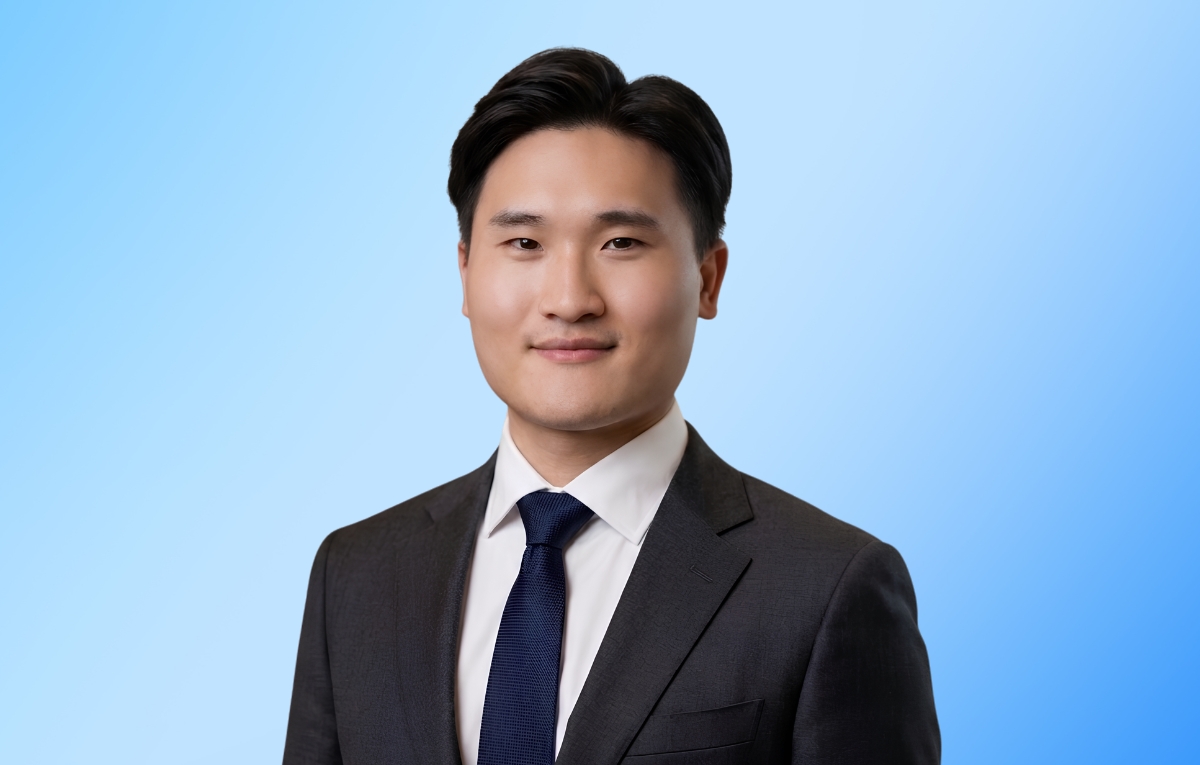
Veteran Haoran He ’26 to Earn MA at Columbia University
Major/Degree: B.S. in Criminal Justice and Emergency Service Administration
Military Branch/Rank: U.S. Army Sergeant
Programs/Clubs: Military and Veterans Services; John Jay Veterans Association
Mentor: Richard “Dick” Pusateri, Military and Veterans Services Director
Internships/Fellowships: Fort Bliss, TX, U.S. Army Judge Advocate General’s Corps Intern
Hometown: China; Brooklyn, NY
Career-Aspiration: Emergency Response Manager
Post-John Jay plans: Columbia University, Enterprise Risk Management Master’s Degree Program
What was life like before John Jay?
I was born in China in 1999 and moved to the United States in 2011. Life in China was a struggle because it was so competitive and we were poor. My parents just wanted to find a better life. Luckily, our green cards were processed before we came to the U.S. We chose New York City because it’s always been a home for immigrants and it’s a diverse place. We wanted to be somewhere that would be welcoming and inclusive. When my family—my dad, mom, and older brother—first came to the U.S., it was hard for them at first because they didn’t speak any English. But after a while, they found jobs and communities where they did not have to use English.
The transition was a cultural shock for me. In China, there was a unified teaching method and almost everyone came from the same background. When I came here, there were all these different perspectives and interesting opinions. Many people had unique personalities. I was in the sixth grade navigating this transition. I remember this one thing in particular -- my teachers kept telling me to look at them in their eyes when I spoke to them. This was so confusing for me because in China, we don’t look people in the eye. It’s considered disrespectful. Here, people use eye contact to communicate with each other. I was trying to be respectful to my teachers, but it wasn’t being seen that way from their perspective. There were a lot of lessons like this that I had to learn about my new home.
What inspired you to join the U.S. Army?
After graduating from high school, I wasn’t sure what to do with my life. I figured that the Army would give me a sense of purpose and help me take on new responsibilities. I wanted to transfer what I learned in the Army to help others in my future career.
I chose the Army because of its history. It was the first U.S. branch of the military that broke segregation. As an Asian American man, seeing that the U.S. Army was the first to break the color barrier, encouraged me to join and be part of it because I knew I’d be welcomed.
I started as a private. Then I graduated and advanced to property book manager and team leader. During those times, I learned how to be more responsible and take care of others. I deployed overseas—Kuwait and Iraq—and it helped me see and understand a bigger picture of how the U.S. influences other countries.
As a property book manager, I managed all the equipment in my unit—which included millions of dollars in property, such as vehicles, computers, and buildings. As a team leader, it was my responsibility to check in on all of my subordinates and make sure that they were physically and mentally fit. I truly loved my seven years in the Army because of the camaraderie. In the Army, we don’t see people by their skin color. We only see green—the color of the Army.
Why John Jay?
When I was researching colleges, the first thing I noticed about John Jay was its advocacy for justice. It’s one of the top criminal justice programs in the country and is well known for its public service. That’s what stood out and it aligned with my personal values. I also learned that John Jay was one of the biggest and best veteran-friendly colleges in the U.S.
I actually started John Jay during my time in the Army Reserve. At first, I was worried about any time conflicts, but my professors were very understanding and helpful, working around any challenges. Dick Pusateri was also extremely helpful in this regard. He’d find my professors and explain my situation. He’s always a strong advocate for veterans and servicemembers.
Why did you decide on being both a criminal justice and emergency service administration major?
I wanted to be a criminal justice major to better understand people’s rights and how to help them with laws and procedures. My reasoning to also major in emergency service administration was to learn how to respond during emergencies and disasters. I wanted to understand what organizations like FEMA did during these events.
During Covid, I saw a lot of people who were sick and dying, and our hospital programs were crashing. A few of my close friends got Covid and they were stuck in the house, in quarantine, not getting the proper medical supplies and care they needed. The hospitals were too crowded, and they were turned away.
Everyone should be a priority when it comes to their health. As a country, we need to prepare for emergencies like Covid and make sure everyone has the shelter, food, and healthcare that they need.
How has the Military and Veterans Services Center helped you?
There’s a tremendous amount of peer support. When I first came to John Jay, they paired me with a mentor who made sure I was taking the right classes, knew about different scholarships, and just generally showed me around the school. All of which were very helpful and made me feel more comfortable. It felt like she gave me the inside track to the school.
The Military and Veterans Services Center also offers veteran education programs. They bring in people from different fields to show us what opportunities are out there for veterans. Dick brought in representatives from the VA and made sure that we knew what benefits we could receive, and different job recruiters visited the Center regularly for career opportunities.
What are your plans after graduation?
I’ll be attending Columbia University’s Enterprise Risk Management Master’s Degree Program. I applied to six different programs, got into all of them, but Columbia’s program was a perfect fit. Dick really helped me throughout the process. He wrote recommendation letters for me and gave me his honest opinion about each of the programs—listing out the advantages and disadvantages they had.
I picked Columbia because it was a well-recognized program and put me out of my comfort zone. Dick pointed out that they had a high percentage of graduates immediately starting jobs, and that was really appealing to me. At Columbia, I hope to deepen my knowledge of planning operations, incident management, and management in general. I see it as a natural continuation to my work in the Army.
Where do you see yourself in 10 years?
I see myself working in an organization like FEMA, going around places where there are major or natural disasters, and helping people in a crisis. If there is a hurricane, earthquake, or epidemic, I want to be on the scene as part of the team that gets people what they need.
Please finish this sentence for us: Because of John Jay…
I learned more about how to take care of other people. I gained the right professional knowledge to become an emergency response manager.